

June 19, 2025 02:27 Created by Rajesh Kumar Yadav, Last modified on June 19, 2025 02:27
Dear Galwians, in today’s modern India, agricultural productivity has increased due to improved farming techniques, chemical fertilizers, and pesticides. However, these practices have also negatively affected the quality of the crops. When it comes to paddy, India is home to several varieties that are renowned worldwide for their taste and aroma. Unfortunately, in recent years, these special qualities have gradually started to diminish which is indeed a matter of concern.
Types of Paddy
India cultivates a wide range of paddy varieties. Some major types include Basmati rice, IRRI paddy, Golden Sonar rice, Sugandha paddy, Lowland paddy (Jaldhan), and High-yield paddy. It is very important to choose the right variety based on your region. For this, consult your nearest agricultural department or experienced farmers.
Sowing Season
Paddy is a Kharif crop, typically sown during the monsoon season. Generally, paddy sowing takes place between June and July, when the rains begin. However, the exact timing depends on the variety of paddy and the local climate. In some regions, sowing may even begin in April or May if the monsoon arrives early.
Transplanting Time
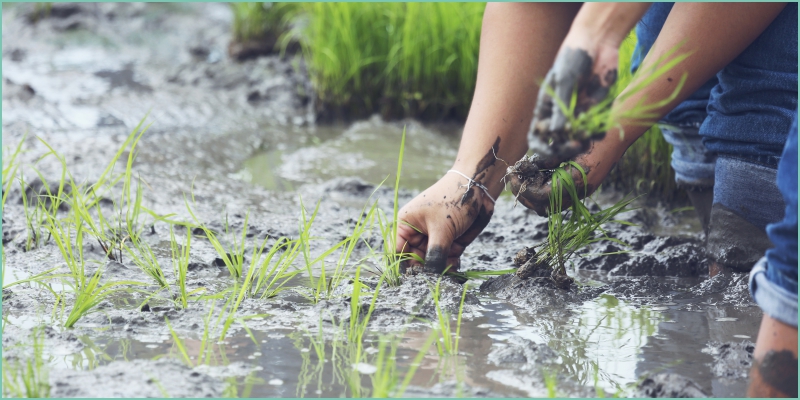
There are two methods of paddy sowing, direct sowing and transplanting. In the transplanting method, seeds are first grown in a nursery and then transplanted into the main field. Transplanting is done 30–45 days after sowing, once the seedlings are strong enough. This typically takes place from mid-July to the end of August. Before transplanting, the field should have at least 5–7 centimeters of standing water to help the seedlings establish strong roots.
Seed Selection and Treatment
Choosing the right seeds is essential for a good yield. While selecting seeds, make sure the variety:
• Is suitable for high productivity
• Has strong disease resistance
• Offers higher yield potential
Now let’s understand how we can grow paddy organically in our fields using Galway Krisham’s organic products:
1. First, treat the soil. For this, mix 1 liter of G-Bio Phosphate Advance with 100–150 kg of decomposed cow dung manure per acre. Let the mixture sit in the shade for 24 hours. After 24 hours, sprinkle it evenly across the field and then plough the land thoroughly.
2. To treat the paddy seeds in the nursery, mix 10 ml of G-Bio Phosphate or 5 ml of G-Potash in 1 liter of water to prepare a solution. Use this solution to treat 1 kg of seeds, then dry them in the shade for 30 minutes before sowing.
3. Once the nursery seedlings are ready, prepare a root treatment solution by mixing 1 liter of G-Bio Phosphate in 500 liters of water. Dip the roots of the seedlings in this solution to disinfect and nourish them.
4. Transplanting: After treating the roots, transplant the seedlings into the prepared field.
Farmers, in this issue we have told you what should be the right time for sowing paddy keeping in mind the type of cultivation and how the organic products of Galway Krisham improve the health of the crop as well as your wealth in this process. Rest of the information in the upcoming edition of the Galway Newsletter.